Product design & engineering
Start with the requirement. Work through form, fit, material, assembly, and the way a person will use it.
Concept development / mechanical design / design for manufacturingA broader set of tools for the problem
Product design, materials, manufacturing, and automation experience. Brought together around what you need to accomplish—and when you need it.
Consider the whole experience.
Connected capabilities
We start with the job to be done, then bring the relevant disciplines and manufacturing partners to the table.
Start with the requirement. Work through form, fit, material, assembly, and the way a person will use it.
Concept development / mechanical design / design for manufacturingBring material behavior and manufacturing considerations into the design, from a formed sheet to a molded component.
Injection molding / plastics forming / blow molding / tool designDevelop and source fabricated parts and assemblies through our manufacturing partners, from brackets to larger equipment structures.
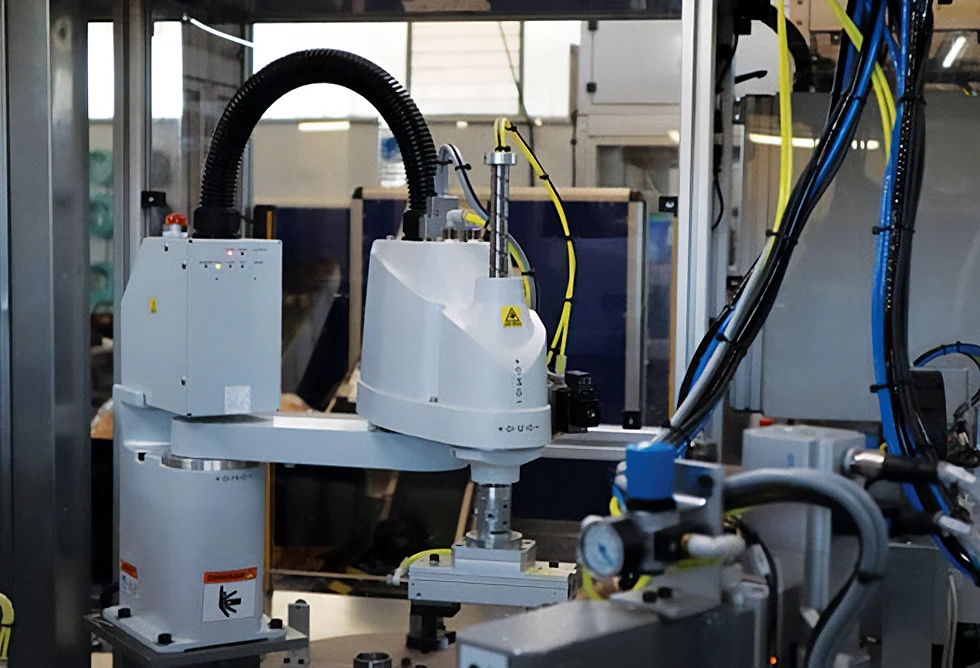
Partner fabrication / formed parts / assembly coordinationApply experience in manufacturing automation to the process behind the product, with attention to handling, repeatability, and the work involved.
Manufacturing workflow / automation concepts / process improvementRapid time to solution
Timelines create constraints that help guide design. We consider the time available alongside function, materials, tooling, and production to find a simple, effective path.
In practice / Electronics supplier
A large electronics supplier needed parts in hand within a few weeks. Its legacy suppliers were quoting several months.
The timeline focused our design decisions. We developed a simple, effective solution and delivered within the required window. Years later, that solution was still in place.
From the first conversation
You don’t need a finished design to start the conversation. A recurring installation issue, a sample part, or a clear requirement gives us something to work with.
Tell us what you’re working on ↗Application, constraints, interfaces, quantity, and timing.
Consider the design, materials, production method, and handling together.
Coordinate the next practical step with the appropriate manufacturing resources.
Put our thinking to work
Bring us the requirement, the installation challenge, or the part that could work better.
Allow anonymous usage analytics to help us improve this website? Privacy details